admin
admin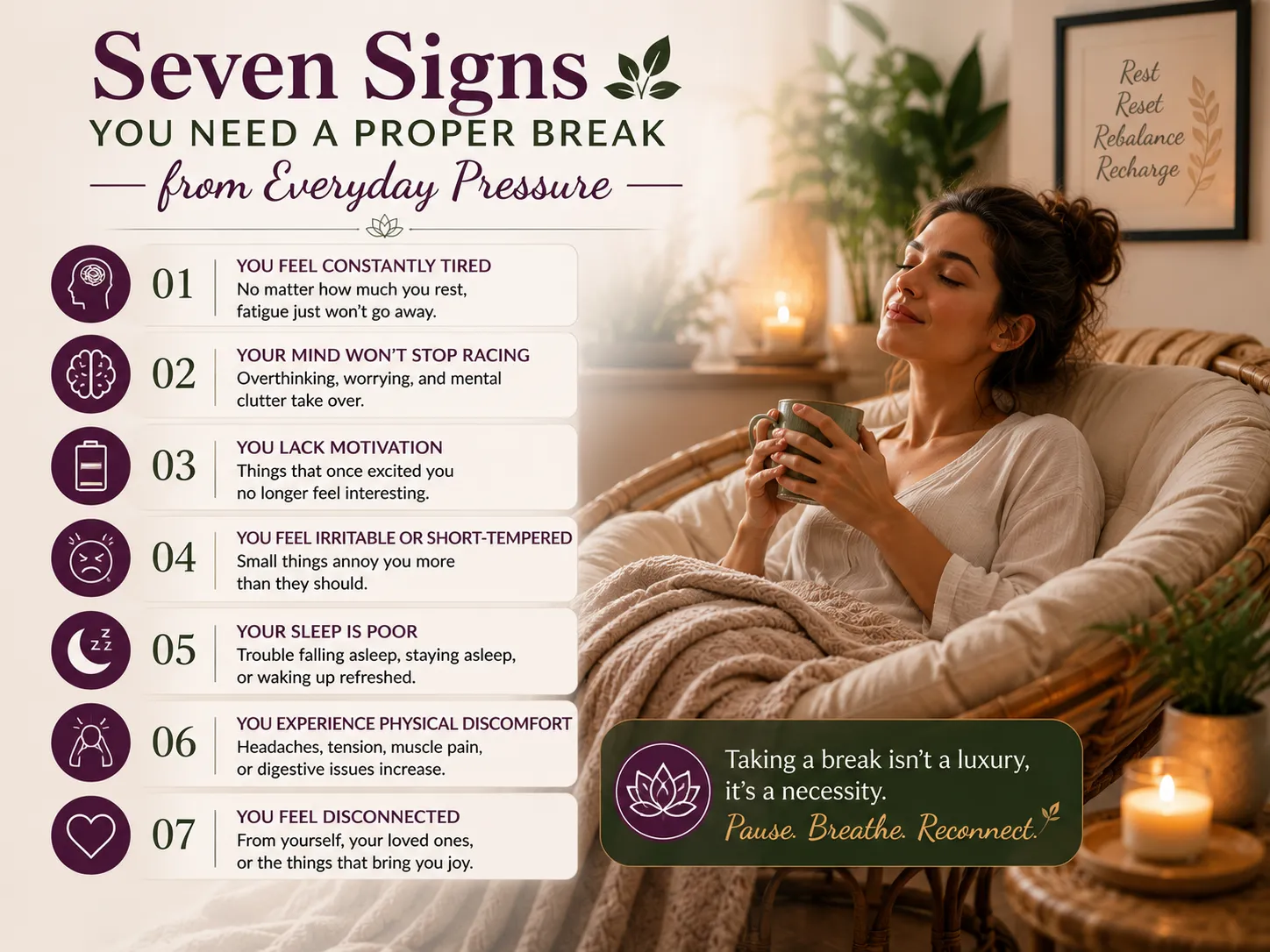
You may need a proper break when ordinary pressure stops ending with the working day. Common clues include difficulty switching off, reduced concentration, changes in sleep, unusual irritability, withdrawing from enjoyable activities, recurring physical discomfort and relying more heavily on unhelpful coping habits. These signs are not a diagnosis, but they are reasonable prompts to pause and review what is demanding too much.
People searching for stress relief London often find quick techniques, classes and appointments. The first step, however, is identifying what kind of break is missing. Five quiet minutes cannot correct an unsustainable workload, while a free weekend may not address persistent symptoms.
Pressure Is Not Always the Same as Stress
Pressure can help us focus. The difficulty begins when demands accumulate without enough opportunity to recover. In London, work may be followed by commuting, crowded spaces, household responsibilities and digital contact. For hybrid workers, work can remain physically present at home.
The NHS Every Mind Matters guidance on stress explains that too much stress can affect mood, the body and relationships. It lists possible emotional, physical and behavioural changes, while emphasising that causes and responses vary between people.
One difficult night or irritable morning does not automatically mean you are overwhelmed. Look for changes from your usual pattern, especially when several continue or interfere with daily life.
Sign 1: You Finish Work but Never Feel Off Duty
Your laptop may be closed, yet the day continues internally. You replay conversations, check messages without intending to respond or rehearse tomorrow’s tasks. Even leisure becomes divided attention.
This is less about being busy than lacking a reliable transition. Work has ended by the clock but not in your attention.
Try a boundary break before aiming for complete relaxation. Spend ten minutes recording unfinished tasks and choosing tomorrow’s first action. Close work applications, silence non-essential alerts and put equipment out of sight. If you commute, make the final part of the journey work-free. At home, a short walk can provide the change of context that a home-working day lacks.
If an employer expects routine availability outside agreed hours, relaxation techniques will not solve the underlying issue. A conversation about workload or contact boundaries may matter more.
Sign 2: Small Decisions Feel Unusually Difficult
Choosing dinner, replying to a straightforward message or deciding which task to start can feel disproportionately demanding. You may delay simple choices, switch repeatedly between options or ask other people to decide everything.
The NHS includes difficulty making decisions, racing thoughts and feeling overwhelmed among possible signs of stress. These experiences can have many causes, so avoid diagnosing yourself from one symptom. Instead, notice whether decision-making has changed alongside your current level of pressure.
A useful break here reduces choices. Plan an uncomplicated meal, decline optional plans and choose a familiar low-demand activity. Use the same walking route or a short list of easy meals.
This is not a permanent retreat from responsibility. It is a temporary reduction in cognitive load. If confusion, memory problems or difficulty functioning appear suddenly, feel severe or concern you, seek medical advice rather than assuming rest is the only answer.
Sign 3: Rest Is No Longer Restorative
You may go to bed on time and still wake feeling depleted. Alternatively, you might delay sleep because late evening feels like the only part of the day you control. Weekends become recovery periods, but Sunday night arrives before you feel restored.
Changes in sleeping too much or too little can occur alongside stress, according to NHS guidance. Sleep difficulties also have many possible explanations, so persistent problems deserve proper assessment.
Choose recovery rather than more stimulation. For one evening, reduce optional tasks, put work away and make the final part of the evening predictable with quiet reading or audio.
Do not try to force sleep or treat one self-care technique as a cure. Speak with a GP if sleep problems continue, affect daily life or appear with other symptoms that worry you.
Sign 4: Irritability Is Reaching People Around You
An everyday delay feels personal. A harmless question sounds intrusive. You respond sharply to someone you care about, then wonder why the reaction was so strong.
Irritability, anger, tearfulness and increased emotional reactions can appear when a person is under strain. The Health and Safety Executive also identifies mood changes, withdrawal and reduced motivation as possible indicators of work-related stress. These signs may have causes unrelated to work, but repeated changes are worth noticing.
The most helpful break may be sensory. Reduce noise, step away from messages and avoid a tense conversation during a crowded journey or late deadline. Agree when you will return to the discussion.
A break should not become avoidance. If conflict is recurring, apologise where needed and address the source. When anger feels difficult to control or relationships are being harmed, seek appropriate support.
Sign 5: Activities You Usually Enjoy Feel Like Obligations
You cancel plans you would normally welcome, stop making time for hobbies or feel detached while participating. Even a relaxing activity becomes another entry on the schedule.
Sometimes declining a plan is exactly the boundary you need. The concern is a broader change: you are repeatedly withdrawing, losing interest or feeling unable to enjoy anything. The NHS notes that stress may affect how often people see others or do things they previously enjoyed.
Match the break to your social energy. If company feels demanding, choose quiet time alone. If isolation is making the week harder, arrange a low-pressure meeting with someone you trust.
Persistent loss of interest, low mood or withdrawal can also be associated with mental-health difficulties. If the change continues or affects your life, speak with a GP or another appropriately qualified professional.
Sign 6: Your Body Keeps Asking for Attention
Pressure may be accompanied by headaches, muscle tension, stomach problems, dizziness or changes in appetite. You might notice that your shoulders remain raised after a commute or that you are clenching your jaw while answering messages.
These symptoms are not proof that stress is the cause. The NHS advises seeing a GP if symptoms worry you or stress feels severe. Chest pain, fainting, sudden symptoms or anything that feels urgent should be treated as a health matter, not managed solely with relaxation.
When there is no urgent concern, a physical break may mean standing, eating regularly, drinking water, walking comfortably or changing a desk position. Complete rest may suit others.
Massage or another body-based wellness service can be an optional part of personal relaxation, but it should never be presented as a treatment for unexplained symptoms. A provider should respect health information, consent, comfort and professional boundaries.
Sign 7: Your Coping Options Are Becoming Narrower
Perhaps every difficult evening ends in hours of scrolling. You may be working later to avoid thinking, drinking more than usual, smoking more, skipping meals or buying things for a brief lift. The behaviour provides a short interruption but leaves the original pressure unchanged.
The NHS identifies changes in eating, exercise, drinking, smoking and other substance use as behaviours that may occur with stress. Noticing a change is not a reason for shame. It is information that your current coping range may be too limited.
Take a substitution break. Leave the phone in another room while showering, eat before reopening work or contact someone you trust before isolating.
If alcohol, drugs, gambling, eating patterns or another behaviour feels difficult to control, a relaxation appointment is not sufficient support. Contact an appropriate healthcare or specialist service.
Choose the Right Size of Break
“Take a break” can mean several different things. Choose according to the level and source of pressure.
| Type of break | Typical length | Useful when | Example |
| Micro-pause | 2–5 minutes | Momentum needs interrupting | Step away from the screen and breathe comfortably |
| Transition break | 10–20 minutes | Work is following you into personal time | Walk, change clothes and put devices away |
| Recovery period | 1–3 hours | You need lower demands and fewer decisions | Quiet meal, gentle movement or uninterrupted reading |
| Rest day | Half or full day | Several days of pressure have accumulated | Protect time from work and optional commitments |
| Structural break | Ongoing change | The same source keeps recreating pressure | Review workload, boundaries, care duties or support |
| Professional support | As advised | Symptoms persist or daily life is affected | Speak with a GP or qualified mental-health professional |
Longer is not automatically better. A day filled with emails and errands may offer less recovery than a protected hour. Micro-pauses also cannot replace structural change.
Gentle Practices That May Support a Break
Breathing, mindfulness and gentle movement can help some people shift attention out of automatic work mode. Keep the practice comfortable and stop if it causes pain, dizziness or distress.
Tantra Yoga is a broad term used differently by various teachers and traditions. A class may involve posture, breath awareness, meditation or philosophy, but content should be checked in advance. Choose a teacher who explains the format, welcomes questions and allows participants to decline or modify an activity.
No practice should promise to cure stress, anxiety, burnout or a medical condition. It can provide a structured pause; it cannot replace healthcare or necessary changes to working and living conditions.
Considering a Professional Relaxation Appointment
Some adults prefer a scheduled appointment because it protects time from work and domestic demands. Before choosing any provider, review the current service description, price, privacy information, hygiene standards, cancellation terms and professional boundaries. Ask questions if the format is unclear.
People using the search phrase most popular Tantric Massage parlour in London should not interpret it as proof of an independent ranking. Popularity alone does not establish professionalism, suitability or the quality of an individual experience.
Adults interested in a private, appointment-based option can review the current information from Tantric Massage London before deciding whether to enquire.
What to Do During the Next 24 Hours
If several signs feel familiar, avoid a complete lifestyle overhaul. Start with four manageable actions:
- Write down the main source of pressure in one sentence.
- Cancel or postpone one non-essential demand.
- Protect one period of at least 20 minutes from work and notifications.
- Tell one trusted person if you are struggling.
Then decide whether you need a larger change. Could work be redistributed? Is leave available? Can somebody share a caring responsibility? Would a medical appointment or professional conversation be appropriate?
The goal is not to become better at tolerating unlimited pressure. It is to reduce what can be reduced and get support with what cannot be managed alone.
Frequently Asked Questions
How do I know whether I need a break or professional help?
A break may be reasonable for temporary pressure that improves with rest and practical changes. Seek professional support when symptoms persist, become severe, worry you or interfere with work, relationships, sleep or everyday functioning.
Does a break have to mean taking leave from work?
No. It can be a protected lunch, a work-free evening or a reduction in optional commitments. However, if work is the continuing source and smaller changes are ineffective, discuss workload, boundaries or leave with an appropriate person.
What if I feel guilty when I rest?
Treat rest as part of maintaining capacity rather than a reward for finishing everything. Begin with a defined period and decide in advance what will remain unfinished. The list can wait; the boundary is the practice.
Can massage or yoga remove stress?
They may provide time for relaxation, and experiences vary. Neither should be described as a guaranteed solution. Persistent or severe stress requires appropriate professional assessment and support.
A Proper Break Creates a Real Change in Demand
The clearest sign that a break is useful is not that it looks impressive. It is that something demanding stops for long enough to create space. That might mean fewer decisions, no work contact, a quieter environment, gentle movement, supportive company or time alone.
There is no single answer to stress relief London searches because pressure has different sources. Notice what has changed, choose a break that responds to the real demand and seek help when rest is not enough. Taking pressure seriously is not weakness; it is a practical decision about your capacity and wellbeing.