admin
admin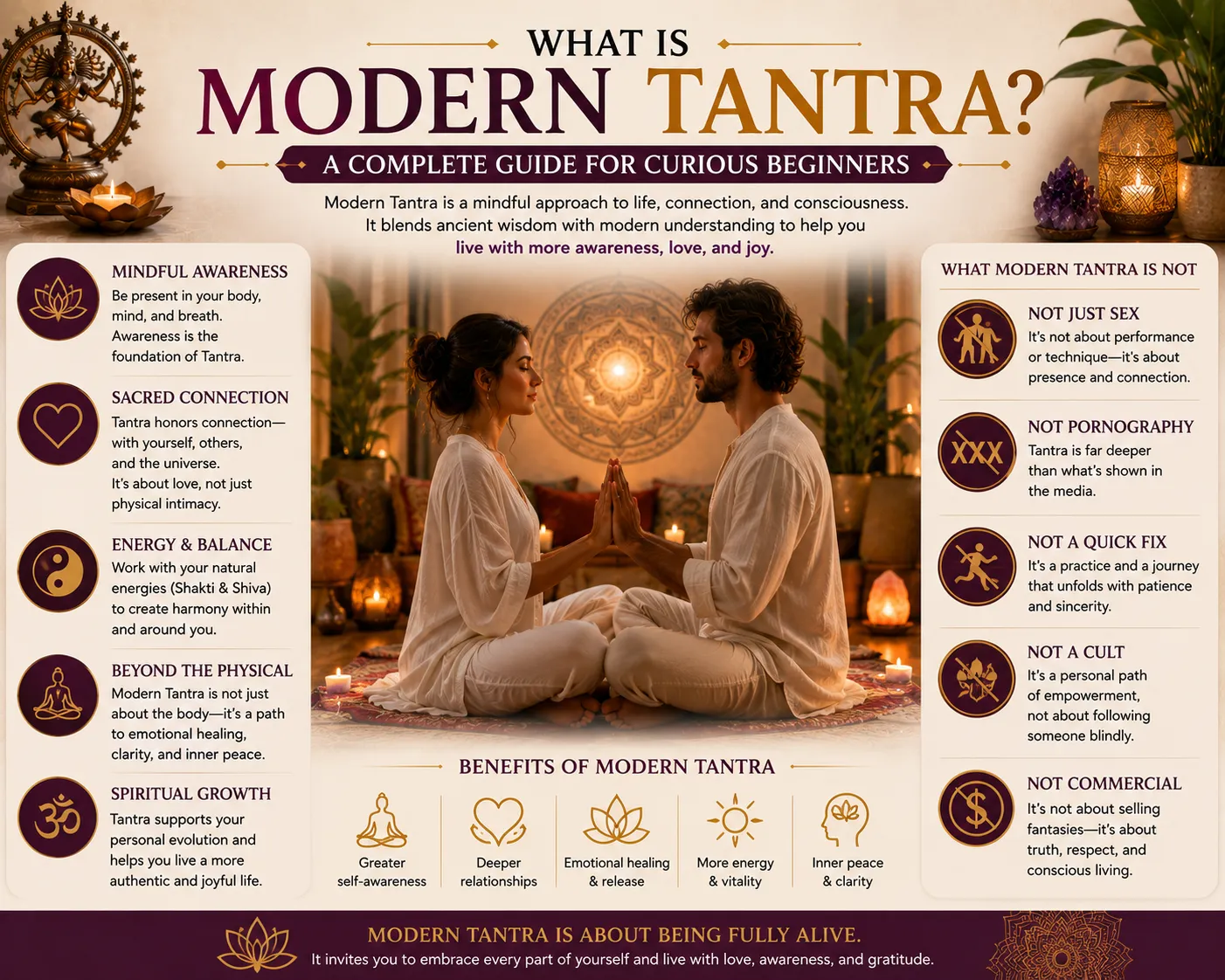
Modern Tantra is a contemporary approach to ancient tantric ideas, adapted for people who want more presence, emotional awareness, body confidence, and conscious connection. It may include breathwork, meditation, movement, sound, eye contact, consent practices, and mindful touch. At its best, it is grounded, ethical, and focused on awareness rather than fantasy.
For beginners, the simplest explanation is this: modern Tantra teaches people to return to the body with attention and respect. It helps them slow down, feel more clearly, and communicate more honestly.
How modern Tantra differs from stereotypes
Many people assume Tantra is only about sexuality. That is incomplete. While some modern forms include sensuality or intimacy, the wider practice includes nervous-system regulation, emotional presence, meditation, ritual, sound, breath, and self-awareness. It can be practised alone, with a partner, or in a guided workshop.
A responsible teacher places consent and boundaries at the centre. No one should feel pressured to touch, reveal, or participate beyond their comfort. Safety is not separate from the practice. It is the foundation.
Core practices
Beginners often start with breath awareness. A simple practice is to inhale slowly, exhale longer, and feel where the breath moves in the body. Another practice is mindful movement, such as slow stretching or tantra yoga for better health. Eye gazing, journaling, mantra, and body scanning may also be used.
These practices build presence. Over time, the practitioner notices emotions earlier, communicates needs more clearly, and feels more at home in the body.
Modern Tantra and intimacy
Some people come to Tantra because they want deeper intimacy. They may feel disconnected from a partner, shy in their body, or tired of rushed physical routines. Modern Tantra can help by slowing the pace and bringing attention to breath, trust, and emotional safety.
In London, someone may compare erotic massage in London, the most popular tantric massage parlor in London, or the best tantric studio in London while trying to understand what kind of body-based support they want. A thoughtful approach should always prioritise professionalism, consent, hygiene, and emotional clarity.
A beginner-friendly routine
Start with ten minutes. Sit comfortably. Place both feet on the floor. Breathe slowly. Notice the body from head to toe. Name three sensations without judging them. Then set one intention, such as “I will listen to my body today.” This small routine is enough to begin.
What modern Tantra is not
It is not a shortcut to instant transformation. It is not an excuse to ignore boundaries. It is not a performance. Real practice requires patience, repetition, honesty, and respect for the self and others.
Final thoughts
Modern Tantra gives beginners a practical way to explore presence, embodiment, intimacy, and emotional awareness. When practised ethically, it can support calmer living and deeper connection. The first step is simple: slow down, breathe, and return to the body.