admin
admin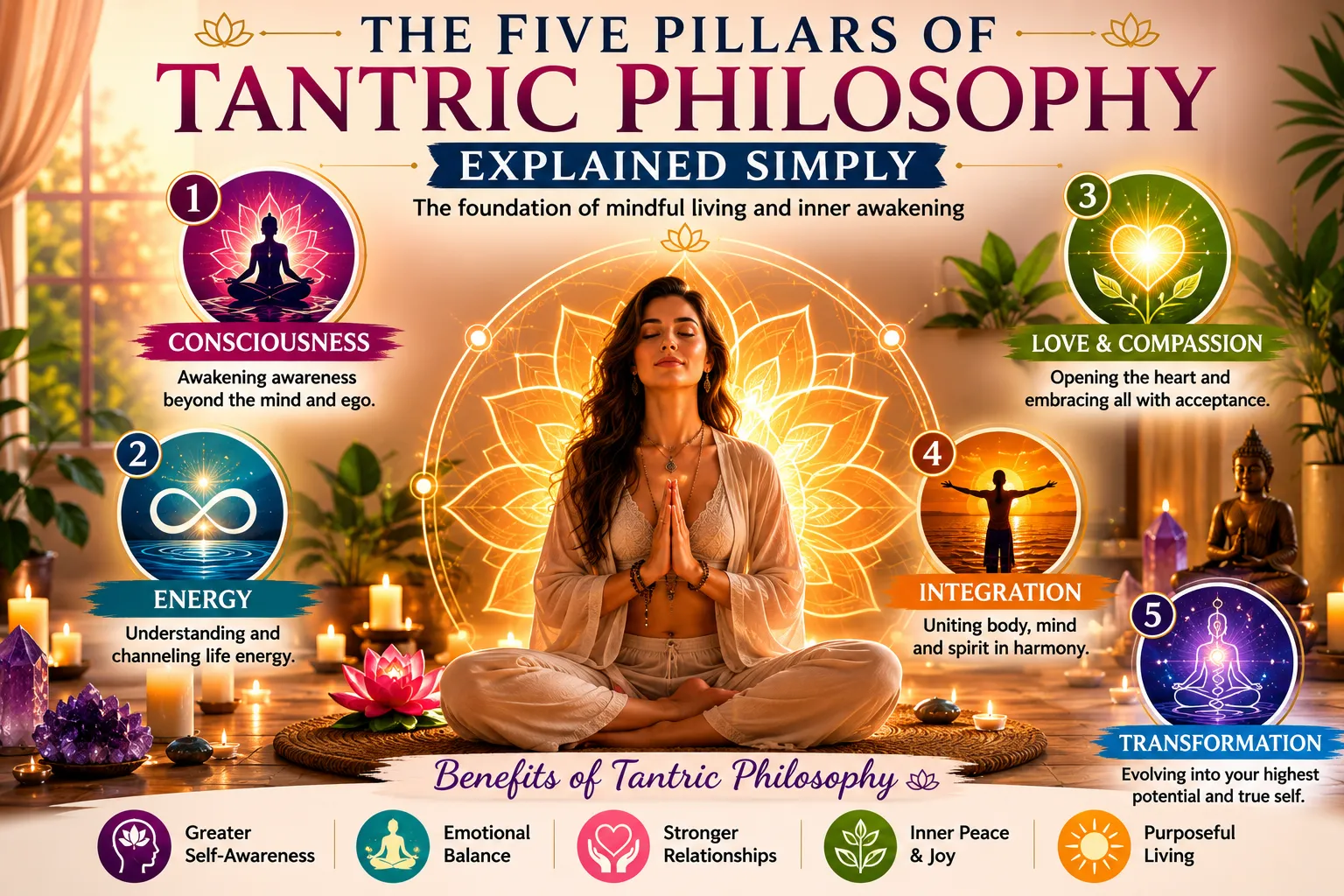
Tantric philosophy can feel complex at first because it includes spiritual texts, rituals, breathwork, meditation, energy, and embodied awareness. Yet its main ideas can be explained in a simple way. Tantra teaches that the body, mind, senses, energy, and daily life are not separate from spiritual growth. They are part of the path.
The five pillars below offer a clear foundation for beginners who want to understand Tantra without confusion or exaggeration.
Pillar 1: Unity
The first principle is unity. Tantra does not treat the body as an enemy of the spirit. It views the body as a living gateway to awareness. Breath, emotion, touch, thought, and sensation all belong to one connected experience. This helps people stop fighting themselves and begin listening more deeply.
In everyday life, unity means noticing how stress affects the shoulders, how emotions change breathing, and how rest improves mental clarity. The person becomes less divided inside.
Pillar 2: Energy
The second pillar is energy. In Tantra, energy refers to the movement of life through the body and mind. It may be felt as warmth, vitality, emotion, desire, creativity, or alertness. The aim is not to suppress energy but to understand and guide it with awareness.
Practices such as breathwork, meditation, mantra, movement, and tantra yoga for better health can help a person feel more balanced. The body becomes a place of observation rather than judgment.
Pillar 3: Awareness
The third pillar is awareness. Tantra asks the practitioner to observe thoughts, feelings, and sensations without immediately reacting. This awareness creates space. A person can notice anger before speaking harshly, tension before it becomes pain, or fear before it turns into withdrawal.
Awareness also supports intimacy. Someone comparing erotic massage in London, the most popular tantric massage parlor in London, or the best tantric studio in London may be looking for a more conscious experience of touch and presence. Without awareness, even relaxing experiences can become rushed or disconnected.
Pillar 4: Sacred action
The fourth pillar is sacred action. Tantra does not limit practice to a temple or meditation room. Eating, bathing, walking, speaking, resting, and touching can all become meaningful when done with intention. This is why Tantra can fit modern life. It turns ordinary actions into moments of presence.
Pillar 5: Ethical connection
The fifth pillar is ethical connection. Real tantric practice depends on consent, honesty, emotional safety, and respect for boundaries. Without these, the practice loses its integrity. Whether someone practises alone, with a partner, or with a teacher, safety and clarity must come first.
How the pillars work together
Unity helps a person stop rejecting the body. Energy teaches them to feel what is alive inside. Awareness helps them observe without panic. Sacred action brings the practice into daily life. Ethical connection protects the heart, body, and relationship. Together, these pillars create a grounded path.
Final thoughts
The five pillars of tantric philosophy are not abstract ideas only for scholars. They are practical tools for calmer living, deeper intimacy, and better self-understanding. A beginner can start with one breath, one mindful action, and one honest moment of awareness.