admin
admin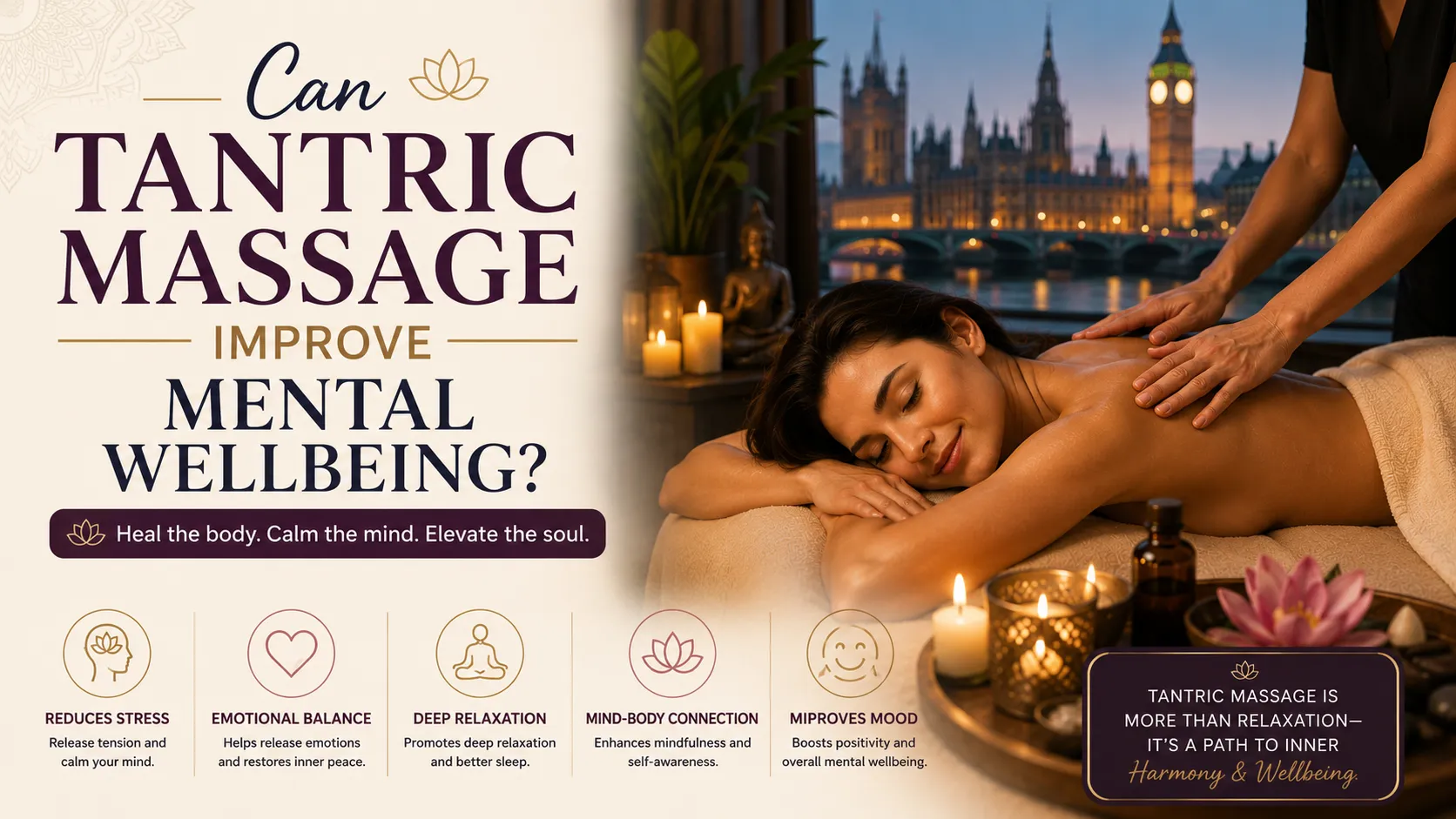
It’s a fair question, and it deserves an honest answer rather than a sales pitch. The short version: a relaxing tantric massage in London can genuinely support how you feel day to day — but it works as part of looking after yourself, not as a treatment for mental health conditions. This is a balanced look at what it can reasonably help with, and where its limits are, so you can decide where it fits for you. Whether you prefer a discreet incall apartment in Marylebone or an outcall to your hotel, honesty about both the value and the boundaries serves you best.
Let’s be clear-eyed about what relaxation can and can’t do — because that clarity is exactly what makes it useful.
What “Mental Wellbeing” Means Here
Mental wellbeing isn’t only the absence of difficulty; it’s also the everyday quality of your headspace — how rested, how settled, how present you feel. That’s the territory where a session can help most. The body-based traditions that lead people to learn Tantra yoga have always linked physical calm with mental clarity, and a luxury tantric session draws on exactly that connection: ease the body, and the mind often eases with it.
It’s worth drawing the distinction plainly. Supporting everyday wellbeing — the ordinary ups and downs of a stressful life — is different from treating a diagnosed mental health condition. A session sits firmly in the first category. Understanding that boundary is what lets you use it well and set realistic expectations.
How a Session Can Support Headspace
These are the kinds of everyday benefits people commonly report — wellness observations, not clinical outcomes:
- A mental reset. A defended, unhurried pause gives an overworked mind room to settle.
- Lower tension. Releasing physical stress often quiets the mental chatter that rides along with it.
- More presence. The slow, breath-led nature of a session pulls you out of rumination and into the moment.
- A lift in mood for a while. Many people describe feeling lighter and clearer afterwards.
A reputable wellness massage parlor in London creates the calm, private environment that makes this kind of mental decompression possible.
Why Physical Relaxation Reaches the Mind
There’s a simple reason a physical experience can affect how you feel mentally. Stress isn’t purely mental — it lives in the body as tension, shallow breathing and a braced nervous system, and that physical state feeds back into the mind, keeping it alert and busy. By easing the body and slowing the breath, a session interrupts that feedback loop from the physical side, which often allows the mind to quiet in turn. It’s not magic and it’s not a cure; it’s the ordinary, well-understood link between a relaxed body and a calmer mind. That’s why so many people describe feeling clearer, not just looser, after a good session.
Where the Limits Are — Honestly
This is the part a trustworthy guide includes. A massage is relaxation and self-care; it is not therapy, not a treatment, and not a substitute for professional support. If you’re struggling with your mental health, the most useful thing you can do is speak to a GP or a qualified mental health professional. A session can sit alongside proper support as one pleasant, restorative part of looking after yourself — but it shouldn’t replace it, and any provider implying otherwise isn’t being straight with you.
Holding both truths at once — that it genuinely helps everyday wellbeing and has real limits — is what lets you use it well. Overselling it would do you a disservice; so would dismissing the real, everyday value it offers. The honest middle ground is where it’s genuinely useful.
Getting the Most From It for Your Headspace
Treat the session as a deliberate pause, not an errand. Arrive without rushing, breathe slowly, and protect quiet time afterwards rather than diving back into noise. Building it into a steady rhythm — monthly suits most people — tends to support headspace more than an occasional one-off, much like any wellbeing habit.
Choosing a Provider That Respects This
Look for trained, professional therapists, a calm and private setting, transparent pricing, and genuine reviews. The best tantric massage therapists in London offer considered, unpressured care and won’t overpromise — and that honesty is itself a sign you’re in good hands.
A Quick Geography Note
Reputable studios cluster across Central London’s calmer, accessible areas — Mayfair, Marylebone, Bayswater, Kensington, Paddington and Soho — so a restorative pause is easy to reach. The most popular tantric studio in London is often the excellent one close enough that taking time for yourself feels simple rather than like an effort.
If you are struggling with your mental health, please consider speaking with your GP or a qualified mental health professional. A massage is a form of relaxation and self-care, not a substitute for professional support.
Frequently Asked Questions
Can tantric massage improve mental wellbeing?
It can support everyday headspace — offering a mental reset, lower tension, more presence and a temporary lift in mood. A tantric massage in London helps as part of self-care, but it is relaxation, not a treatment for mental health conditions.
Is it a substitute for therapy?
No. It is self-care, not therapy or treatment. If you are struggling, speak to a GP or qualified mental health professional. A session can sit alongside proper support, not replace it.
Why does relaxing the body help the mind?
Because stress lives in the body as much as the mind, and the two feed each other. Easing physical tension and slowing the breath interrupts that loop from the physical side, which often lets the mind quiet in turn — the ordinary link between a relaxed body and a calmer mind.
How often helps headspace most?
A steady rhythm tends to help more than an occasional one-off, with monthly suiting most people — much like any wellbeing habit. Consistency matters more than intensity.
How do I choose an honest provider?
Look for trained therapists, a calm private setting, transparent pricing and real reviews. The best tantric massage therapists in London give considered care and don’t overpromise — that honesty is a good sign.